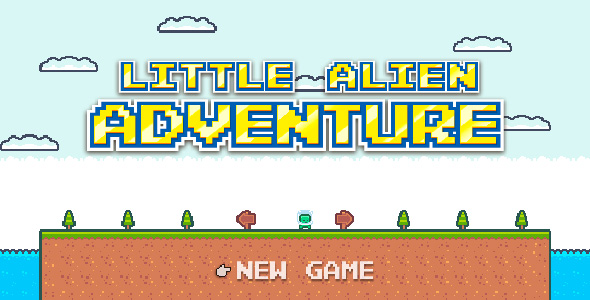
Developing a cross-platform game from scratch is a monumental undertaking. You need to manage physics, animation, level design, and complex code, all while ensuring the experience feels smooth on mobile and desktop. For indie developers and studios looking to fast-track their release, finding a robust starting point is often the difference between shipping a product and abandoning a project. Little Alien Adventure offers a complete, production-ready solution for developers seeking a polished 2D platformer framework. This isn’t just a demo; it is a full-fledged game with 20 unique worlds, designed to be a commercial-grade template or a customizable base for your next project.
This article provides a deep dive into the Little Alien Adventure — Cross Platform Platformer Game from Raizensoft. We will analyze its core mechanics, technical architecture, and practical applications. By the end, you will have a clear understanding of whether this source code is the right investment for your development needs, saving you hundreds of hours of coding and debugging.
Key Features
The appeal of a premium game template lies not just in its playability but in the quality of its code and the efficiency of its workflow. Little Alien Adventure excels in both areas, offering a robust suite of features that bridge the gap between a hobby project and a market-ready application.
- 20 Immersive Worlds: This is not a simple 5-level tech demo. The game includes 20 distinct worlds, each presenting escalating difficulty and new environmental challenges. This content volume provides immediate value, offering players and developers hours of gameplay right out of the box. You can use these levels as a full campaign or strip them down to understand complex level design structures.
- Addictive Core Mechanics: The gameplay loop is built on classic, proven platformer mechanics. It features tight controls for running, jumping, and a double jump mechanic to navigate long gaps and reach hidden areas. The challenge lies in mastering these simple controls to overcome obstacles like monsters, spikes, and pits, creating a “simple to learn, hard to master” dynamic that keeps players engaged.
- True Cross-Platform Compatibility: The framework is built using the libGDX framework and Java. This allows for seamless deployment across desktop browsers (HTML5), Android, and iOS from a single codebase. This feature alone drastically reduces development costs and time-to-market compared to writing separate native versions for each platform.
- Complete Build System with Gradle: Forget complex manual configuration. The project includes a comprehensive Gradle build system. This allows you to generate platform-specific packages with simple commands, streamlining the testing and deployment process. It automates dependencies and versioning, ensuring your project remains organized and scalable.
- High-Quality, Commented Source Code: The codebase is not black-boxed. It is written in Java with extensive comments, making it an excellent learning resource for intermediate developers. You can easily trace the logic for physics, collision detection, and animation, allowing for quick customizations and feature additions.
- Responsive User Interface (UI): The UI adapts fluidly to different screen resolutions and aspect ratios. Whether the player is on a widescreen monitor, a tablet, or a portrait-mode phone, the menu systems and heads-up display (HUD) remain clear and functional, providing a professional user experience.
- Asset Management for Gold & Rewards: The game includes a collectible system featuring gold items. The source code provides a clear implementation of a collectible and scoring system, a fundamental feature for any game that aims to include meta-progression or achievements.
- Extensive Documentation: A detailed documentation file accompanies the source code, guiding you through the project structure, build commands, and basic customization steps. This reduces the learning curve significantly, allowing you to start modifying the game immediately.
Who Is This For? Use Cases
Little Alien Adventure is more than just a single game; it is a versatile toolkit. Its target audience is broad, spanning from educational learners to professional indie studios. Here are the primary use cases where this product shines.
Indie Game Developers Seeking a Head Start
If you have an idea for a platformer but dread the 6-12 months of boilerplate coding required to get basic movement and collision working, this is your shortcut. Instead of starting from scratch, you can purchase this template, analyze its architecture, and layer your unique art style, narrative, and mechanics on top of a rock-solid foundation. You save significant time on core programming and can focus your energy on what makes your game unique—level themes, boss fights, or unique power-ups.
Learning Java & LibGDX Development
The gaming industry is competitive, and hands-on experience is invaluable. This product acts as a comprehensive case study for Java and libGDX development. Because the code is heavily commented, you can study the architecture and understand how professional developers structure a multi-level game. It serves as a practical step-by-step guide to game development concepts such as state management, entity components, and cross-platform rendering.
Creative Agencies & Prototyping Teams
For agencies tasked with creating a branded game for a client, speed is key. This template allows you to rapidly prototype a playable demo. You can reskin the alien character, change the background environments, and tweak the difficulty within days, presenting an interactive proof-of-concept to a client. This dramatically improves the pitch process and allows for user testing much earlier in the pipeline.
Technical Details & Compatibility
Understanding the technical stack is crucial before integrating any new tool. The Little Alien Adventure codebase is built on mature and reliable technologies. It leverages the libGDX framework, a high-performance Java library that is widely regarded as one of the best for cross-platform game development.
The project is predominantly written in Java, which ensures excellent performance on all platforms due to its compiled nature and efficient garbage collection. The inclusion of Gradle means the build process is automated and reproducible. You can run the desktop version locally for testing, and then use specific Gradle tasks to generate Android APKs, iOS binaries (using RoboVM), or HTML5 web builds.
For the visual interface, the game utilizes responsive design principles. This means the game world and UI elements scale appropriately to fit the screen. The game is compatible with all modern desktop browsers supporting WebGL (for the HTML5 export), and it targets iOS 8.0+ and Android 4.0+ (Ice Cream Sandwich) and higher. The documentation provides specific details regarding the project structure, recommending use of IntelliJ IDEA or Android Studio for the best development experience.
Pros and Cons
To make an informed decision, it’s important to look at the product objectively. No solution is perfect for every scenario. Here is a balanced breakdown of the strengths and potential limitations of this game template.
Pros
- Massive Time Savings: The most obvious benefit is the hundreds of hours saved on core development. You are buying a finished product with proven mechanics.
- Excellent Value for Content Volume: 20 levels is a substantial amount of content. This provides a complete game experience, far exceeding typical demo templates.
- Cross-Platform Reach: The ability to export to Android, iOS, and web from a single codebase is a major cost and logistics benefit.
- Readable and Educational Code: The heavy commenting makes it easy to learn from. It is not obfuscated or messy, making customization safer and easier.
- No Royalties or Fees: You purchase the license once, and the code is yours to use in commercial projects without paying ongoing royalties to the author.
Cons
- Narrative Complexity: While the mechanics are solid, the story is focused on simple gameplay objectives. If you are looking for deep RPG-style dialogue systems, you will need to implement those yourself.
- Asset Art Style: The art style is functional and clean, but you may wish to replace it to fit your specific brand identity. The code is not tied to the art, but re-skinning will take some time.
- Requires Java Knowledge: The primary caveat is that you must be comfortable with Java. If you are a JavaScript or C# developer, there is a learning curve associated with libGDX and Java syntax.
Frequently Asked Questions
Before making a purchase, developers often have specific questions regarding the extent of their rights and the technical requirements. Here are answers to the most common queries regarding this product.
Can I sell the game I build with this template?
Yes, absolutely. The license for this source code grants you the rights to use it in commercial projects. You can create a game, sell it on the App Store, Google Play Store, Steam, or your own website without paying royalties to Raizensoft. The only restriction is that you cannot resell the source code itself as a stock asset or template.
Do I need a Mac to build the iOS version?
Yes, building the iOS version requires specific tools. To compile and deploy to an iPhone or iPad, you will need access to Xcode, which only runs on macOS. However, the code itself is cross-platform. You can do all the development and testing on Windows or Linux, and only use a Mac for the final native iOS packaging step.
Is the game logic easy to modify? What if I want to change the character speed or jump force?
Yes, the code is designed to be modifiable. All game parameters, such as movement speed, jump velocity, gravity, and enemy behavior, are defined as variables within the Java classes. Because the code is highly commented, you can easily locate these settings and adjust the values to tweak the “game feel” without digging through complex physics engines or binary files.
Final Verdict
In the crowded market of game templates, Little Alien Adventure stands out as a highly professional, feature-complete package. It strikes an excellent balance between being a straightforward “plug-and-play” game and a complex learning tool. The utilization of the libGDX framework ensures a solid technical foundation, while the comprehensive build scripts remove the usual headache associated with cross-platform exports.
Raizensoft has a reputation for delivering premium, quality code within the Envato ecosystem, and this platformer is a testament to their expertise. The sheer volume of 20 playable worlds offers immediate value for gamers and developers alike. However, the real gold lies in the well-structured source code. It empowers you to learn, iterate, and create a unique gaming experience that bears your creative signature.
If you are serious about developing a 2D platformer, this investment is a strategic move to bypass the most tedious phase of development. Stop wrestling with sprite collisions and camera controls. Instead, focus on level aesthetics and unique gameplay twists. Purchase Little Alien Adventure today and take the fastest route from concept to a live, cross-platform game ready for the global market.