Shield Slot Games is a single HTML5 slot machine built in Construct 3 and sold on ThemeForest for $12. It delivers a browser-based, touch-friendly reel game that runs on desktop, Android and iOS without a native app wrapper, and it ships with the editable Construct 3 project file for buyers who hold an extended licence. It suits developers who need a ready-made casino mini-game to drop into a larger platform, and buyers who want a cheap, reskinnable starting point rather than a finished commercial product.
What Shield Slot Games Actually Delivers
The download is deliberately small. Buyers receive the compiled HTML5 files, a documentation file, and — only under the extended licence — the .c3p Construct 3 project. That split matters more than the feature list suggests, because the compiled build is essentially a black box: colours, symbols and layout can be adjusted through the exported assets, but anything structural requires the source project. Anyone planning to change reel behaviour, paylines or payout logic should budget for the extended licence from the outset rather than discovering the limitation after purchase.
Platform coverage is handled the way modern HTML5 games usually handle it. The game runs in a browser on PC, Android and iOS, and accepts both mouse and touch input, so there is no separate mobile build to maintain and no app store submission process. For a casino operator or a studio embedding a game inside an existing web platform, that removes an entire distribution headache.
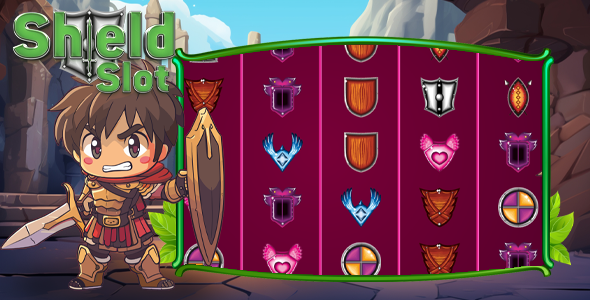
The graphics are the vendor’s main selling point, and the claim holds up in the sense that matters commercially: the art is clean and the layout is uncluttered, which makes reskinning realistic. Swapping symbol artwork, adjusting the palette and replacing the background are the kinds of changes a designer can complete without touching game logic. That is the practical value of a small, tidy Construct 3 project — the surface area for customisation is small enough to be manageable.
Construct 3 itself is worth noting as a technical choice. It exports to HTML5 natively, keeps file sizes low, and uses an event-sheet model that a non-programmer can read. A freelancer who has never opened a game engine can still follow the logic well enough to change timings or swap assets. That lowers the barrier considerably compared with a hand-coded JavaScript slot engine, where the same edit might require understanding a custom framework.
What the listing does not state is equally relevant. There is no information about the number of reels, paylines, RTP configuration, bonus rounds, wild or scatter mechanics, or whether the payout tables are adjustable. The vendor describes “attractive game rules” without specifying them, and no demo credentials for the game itself are provided — the linked demo site belongs to a separate Laravel casino platform that is explicitly not included in the download. Buyers should treat the mechanics as unverified until they see the preview.
Where Shield Slot Games Fits, and Where It Does Not
The strongest use case is embedding. A developer building a social casino, a loyalty reward page, a promotional microsite or an in-app arcade can drop this in as one cabinet among several and get a functioning reel game for the price of a sandwich. The small file size and single-build deployment make it easy to serve from a CDN alongside other mini-games.
A second fit is prototyping. An agency pitching a casino concept to a client can use Shield Slot Games as a visual placeholder, reskin it to the client’s brand, and demonstrate the interaction model in a browser during the pitch. At $12 the cost is negligible against the value of a working demo, and the Construct 3 source makes the reskin straightforward.
Learning is a third, quieter use case. Construct 3 users who want to understand how a slot loop is structured — spin trigger, reel animation, result resolution, win presentation — can read the project file as a worked example. That is a legitimate reason to buy even if the game never ships.
Where it falls down is anywhere the game has to carry a product on its own. A regulated real-money gambling operation needs certified random number generation, auditable RTP, jurisdiction-specific compliance and back-end integration for balances and payouts. Nothing in the listing suggests any of that exists here, and a $12 ThemeForest asset is not the place to look for it. Similarly, a studio that needs a distinctive, fully bespoke slot with original mechanics will spend more time fighting the existing structure than building from scratch. And anyone who wants a complete casino platform — accounts, wallets, admin panel — is looking at the wrong product entirely; the vendor’s own Laravel platform is a separate purchase.
Strengths and Limitations
Strengths
- Genuinely cross-platform from a single HTML5 build, with mouse and touch input both supported out of the box.
- Small download footprint, which keeps page load times low when the game is embedded in a larger site.
- Clean, uncluttered art direction that makes reskinning practical rather than painful.
- Construct 3 project file available, giving buyers access to the underlying logic rather than a locked export.
- Low price relative to the cost of building an equivalent reel game from scratch.
- Documentation included, which is not guaranteed at this price point.
Limitations
- The .c3p source file is gated behind the extended licence, so the base purchase does not include editable logic.
- No reels, paylines, RTP, volatility or bonus mechanics are documented in the listing, leaving the core maths unverifiable before purchase.
- No playable demo of the game itself is linked; the demo URL points to an unrelated Laravel casino product.
- No stated support for back-end integration, player accounts or currency handling.
- No sales count or rating is disclosed, so there is no independent signal from other buyers.
- Reskinning still requires design work and Construct 3 familiarity — it is not a drag-and-drop rebrand.
How Shield Slot Games Compares With Other HTML5 Casino Assets
The general category here is the HTML5 slot template: small, self-contained reel games sold on marketplaces for a low one-off fee. Within that category, the differentiators are almost always the same three things — what engine the source is built in, whether the source is included, and how much of the maths is exposed.
On engine, Construct 3 is a reasonable middle ground. It is more approachable than a raw JavaScript or Phaser codebase for designers, but less flexible than a fully hand-coded engine for developers who want to rewrite the payout model. Buyers comparing options should weigh how much they intend to change: a light reskin favours Construct 3, a deep mechanical rewrite favours a code-first template.
On source inclusion, Shield Slot Games sits behind a licence tier, which is common but worth flagging. Some competitors bundle the editable project in the standard purchase. That difference changes the true cost of the product meaningfully — the sticker price is $12, but the price of a genuinely customisable version is higher and the vendor does not publish the extended licence figure in the listing.
On maths transparency, this listing is weaker than the category norm. Most slot templates at least state the number of reels and paylines, and many describe the bonus features. Shield Slot Games does not, which makes side-by-side comparison difficult and pushes the decision onto the preview and the demo rather than the specification. Buyers who need documented mechanics should ask the vendor directly before purchasing.
Where it competes well is polish-per-dollar. The art is presentable, the layout is clean, and the file size is small — the three things that determine whether an embedded game feels like an asset or an embarrassment. For a cheap cabinet in a larger collection, that is often the whole decision.
Frequently Asked Questions
What engine is Shield Slot Games built in?
It is built in Construct 3, a browser-based game engine that exports to HTML5. That choice keeps the file size small and makes the project logic readable through event sheets rather than raw code, which suits designers and non-programmers. Buyers who want to modify the game will need Construct 3 itself, sold separately by its own vendor.
Does the $12 purchase include the editable project file?
No. The standard download contains the compiled HTML5 files and documentation only. The .c3p Construct 3 project file requires the extended licence, as the vendor states in the listing. Anyone intending to change game logic rather than just swap artwork should factor that additional cost into the decision before buying.
Can Shield Slot Games be used on Android and iOS?
Yes, it runs in mobile browsers on both platforms, and the listing confirms touch controls are supported alongside mouse input. There is no native app build, so distribution happens through the web rather than the App Store or Google Play. That is normally an advantage for embedding, but it rules out native app store listings.
Is Shield Slot Games suitable for real-money gambling?
No, not as sold. The listing documents no certified random number generation, no auditable RTP figure, and no back-end integration for balances, payouts or player accounts. Regulated gambling requires all of those plus jurisdictional compliance. This product is a front-end game asset, not a gambling platform, and should be treated accordingly.
Verdict on Shield Slot Games
Shield Slot Games is worth buying for developers who need a cheap, presentable slot cabinet to embed in a larger web property, and for agencies that want a reskinnable demo asset without commissioning custom work. The clean art, small footprint and Construct 3 foundation make it a sensible low-risk purchase at $12, and the included documentation is a small but real bonus. It is not the right choice for anyone building a regulated gambling product, nor for studios that need documented mechanics and full source access in the base purchase — the extended licence requirement and the absence of published reel, payline and RTP detail are genuine obstacles. Buyers should also note the lack of any disclosed sales or rating history, which means there is no buyer feedback to lean on. Treat it as a component, not a platform, and the value proposition holds up.