Meditation and fitness apps are booming, yet the market is flooded with options that feel disconnected from the user’s real journey. Users are searching for a sanctuary that combines mental clarity with physical tracking, and developers are looking for a solution that doesn’t require months of complex coding.
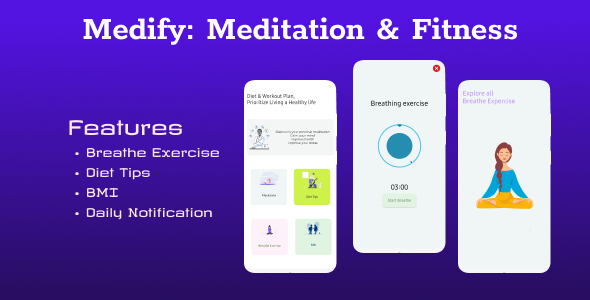
Medify: Meditation & Fitness with Google Admob addresses this bridge directly. It is not just another wellness template; it is a comprehensive, production-ready Android application built with Kotlin that merges mindful meditation guides with robust fitness tracking, all while featuring an intelligent advertising structure designed to maximize your revenue from day one. Whether you are an indie developer launching your first app or an agency delivering client projects, Medify offers a powerful starting point that feels premium and functions reliably out of the box.
This article cuts through the feature list to give you an honest technical evaluation, practical use cases, and the strategic reasons why this might be the last wellness app template you’ll ever need to purchase.
Key Features
Medify was architected with a focus on modern Android development and monetization efficiency. The feature set distinguishes it from generic event listing or utility templates by focusing on the specific needs of the health and wellness niche.
- Google Material Design Implementation: The app adheres strictly to Google’s Material Design guidelines for Android. This ensures a familiar, intuitive navigation experience for users. The UI components are built to feel native and responsive, reducing the learning curve for new users and ensuring your app looks modern on a wide range of devices. This is crucial for user retention, as a clunky UI is the fastest way to get an uninstall.
- Advanced Admob Integration (Open Bidding + Mediation): Monetization is where Medify truly shines. It supports Audience Network Open Bidding with StartIO as a mediation partner. This isn’t just about showing ads; it’s about using real-time bidding to increase competition for your ad inventory. The template intelligently manages App Open, Banner, Interstitial, and Native Ad formats, alongside a custom floor price setup. This strategy is designed to boost your eCPM (earnings per thousand impressions) and significantly increase ad revenue compared to standard waterfall mediation.
- OneSignal Push Notifications: Retaining users in the wellness niche requires consistent engagement. The integration with OneSignal allows you to send targeted push campaigns—daily reminders, motivational quotes, or session reminders. This is essential for building a daily habit around your app, which is the core metric for success in this category.
- Kotlin Navigation Graph: Built with Kotlin, the app uses the Navigation Component. This modern architecture simplifies the flow between screens, making the codebase cleaner and easier for developers to update or customize. It reduces the boilerplate code and helps in avoiding common back-stack errors, ensuring a stable user journey from the splash screen to content.
- Lottie Animation Support: The user onboarding and splash screens are brought to life with Lottie animations. Instead of static images or heavy GIFs, Lottie uses lightweight JSON files, which means you get a stunning, high-end visual experience without sacrificing app performance or loading times.
- Utilization and Engagement Tools: The latest updates include a Period Due Date calculator and a BFP (Body Fat Percentage) calculator. These are not just gimmicks; they are functional tools that solve immediate user problems. By adding these calculators, you increase the “stickiness” of the app, giving users more reasons to open it daily beyond just meditation sessions.
Who Is This For? Use Cases
Understanding the target demographic for this template is essential to leveraging it effectively. Medify isn’t a one-size-fits-all solution; it is tailored for specific scenarios where monetization and content are key.
For Indie Developers Looking for a Fast Launch
You have a passion for app development but want to avoid spending three months building basic architecture. Medify gives you a professional skeleton. You can quickly rebrand the package name, swap the colors, and load your own meditation audio files or fitness video links. This allows you to test the wellness market without enormous sunk costs. The integrated Admob setup means you can start generating revenue immediately, even if you haven’t yet invested in massive user acquisition.
For Digital Agencies Managing Client Portfolios
Clients in the health and lifestyle sector often request “an app like Calm” on a tight budget. Medify allows you to deliver a robust product quickly. You can focus your service time on content curation and brand design rather than coding backend logic. The pros and cons balance is favorable here because the template provides a stable base, allowing your team to focus on differentiation through content—which is where consulting value lies. You can sell maintenance and content update packages on top of the initial build.
For Content Creators and Influencers
If you are a yoga instructor, a life coach, or a fitness guru, this app is the perfect vessel for your digital presence. App stores often rank established branded apps higher than social media pages. With Medify, you can create a branded space where your followers can access your exclusive meditation tracks and workout plans. The Native Ad formats allow you to promote your own merchandise or courses within the app seamlessly, creating an additional revenue stream without disrupting the user experience.
For Startups Testing Monetization Strategies
The specific setup of App Open Ads combined with Interstitial placement is a strategic choice. Medify is an excellent test bed for understanding user tolerance to ad frequency. The update log mentions “More Interstitial Ads Showing” which indicates the developer has already identified high-impact placement zones. If your business model relies on ad-sense rather than subscription, this template is built perfectly for high-volume, low-cost user acquisition models.
Technical Details & Compatibility
To ensure a smooth deployment, it is vital to verify your development environment against the template’s requirements. Medify is developed specifically for the Android platform. It is built using Kotlin, which is the industry standard for modern Android development, ensuring future compatibility with Google’s ecosystem.
- Language & Architecture: Kotlin with Navigation Graph for flow management.
- Minimum SDK: Typically, templates like this support Android 5.0 (Lollipop) and up, which covers over 95% of active devices globally.
- Monetization SDKs: Google AdMob (Mandatory for setup), Facebook Audience Network (Meta), and StartIO for mediation.
- Push Notifications: OneSignal SDK (requires API key setup).
- Documentation: A comprehensive technical document is provided (linked in the product description) that guides you through API key setup, ad unit creation, and code structure navigation.
Regarding the “last update,” the log reflects a solid maintenance schedule. The developer has moved from V1.0 to V1.2, showing active support and a commitment to improving the user experience and fixing bugs (e.g., “Fixed V1.0.2”). This indicates you are purchasing a product that receives patches and feature enhancements, which is critical for long-term stability on the Play Store.
Note: While this is an Android-native solution, it does not use Flutter or React Native. If your strategy requires cross-platform (iOS), you would need to source a separate solution or use the Android code as a blueprint for native porting.
Pros and Cons
No product is perfect, and recognizing the limitations of Medify will help you plan your development timeline and budget. A transparent look at the trade-offs is essential.
Pros
- High Revenue Potential: The heavy focus on Open Bidding and Mediation is a massive advantage over templates that only offer basic banners. It is designed to maximize eCPM.
- Modern Codebase: Using Kotlin and Navigation Graph means the code is clean and maintainable. For developers, this is far easier to extend than older Java-based templates with outdated UI libraries.
- Engaging UI/UX: The combination of Material Design and Lottie Animation gives the app a polished, high-budget feel that can rival custom-built apps.
- Utility Tools Included: The addition of the BFP and Period Due Date calculators offers immediate value to users, encouraging app opens beyond just audio streaming.
- Effective Support Channels: Despite being a template, the inclusion of a dedicated Demo and Technical Documentation link suggests a professional development approach.
Cons
- Android Only: This is a significant limitation if you have a multi-platform strategy. You will need to port the code or hire an iOS developer if you need an iPhone version.
- Ad Dependency: The business model relies heavily on ads. While this is great for revenue, it means your user experience is dependent on the presence of ads. If you later decide to move to a subscription model, you will need to perform substantial code modifications to segment the user base.
- Generic Content Structure: The template provides the “skeleton” but not the “muscle.” You must create or license the actual meditation audio files and fitness content. The code will not include proprietary relaxation music or video workouts.
Frequently Asked Questions
Is Medify compatible with the latest Android OS versions and Google Play policies?
Yes. Because it uses Google Material Design and the modern Kotlin architecture, it is built to comply with current Google Play requirements. However, you must ensure that you update the SDK versions to the latest available in Android Studio before release to meet new policy requirements regarding data safety and privacy. The template’s core structure is sound, but standard maintenance on your end is required to keep it live.
Do I need coding knowledge to deploy this app?
Some basic to intermediate Android Studio knowledge is required. You will need to know how to navigate the gradle files, change the application ID, and insert your own API keys for Admob and OneSignal. If you are a non-technical buyer, it is highly recommended to have a consultant ready to assist with the setup, as uploading a Kotlin project to the Play Store does require a development environment.
Can I upload my own meditation audio and fitness videos inside this template?
Absolutely. The template is a framework. You will connect your own content sources, typically via URLs in a JSON file or database. You can use this structure to point to your own cloud storage (like Firebase or a CDN) where you host your MP3s and MP4s. The code handles the playback and display, while you are responsible for the content management.
Final Verdict
Medify: Meditation & Fitness with Google Admob is more than just a pretty face; it is a monetization-first tool designed for developers who understand that time is money. In a marketplace where many wellness apps struggle to monetize effectively, Medify delivers a distinct advantage through its advanced Admob Mediation and Bidding setup. The developer has clearly prioritized high fill rates and high CPC (Cost Per Click), which is the most challenging aspect of launching a free app.
The inclusion of period due date and BFP calculators demonstrates that the developer is listening to market trends and user needs, making it a forward-thinking template rather than a static code dump. While the lack of an iOS version is a constraint, for Android-focused entrepreneurs, this script offers a massive head start. It is not a toy; it is a legitimate business framework.
Whether you are aiming to launch a personal brand, expand an agency portfolio, or just dive into the lucrative health tech niche, this codebase saves you months of development time and debugging. The repository is actively maintained, and the documentation is provided, which reduces the technical hurdles significantly.
If you are ready to enter the wellness market with a reliable, revenue-generating application, do not start from scratch. Leverage the power of Medify today and shift your focus to where it matters most—building your content library and growing your user base.