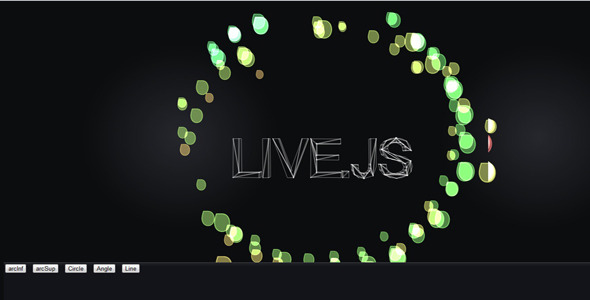
Valentine Card v2 Canvas is a $20 HTML5 e-card package sold on ThemeForest by Odiusfly Studio, delivered as a self-hosted folder that can be dropped onto a web server or embedded in an existing page via an iframe. It is aimed at site owners, freelancers and small agencies who want a ready-made seasonal greeting page rather than building an animated card from scratch, and it ships with two versions, mouse and touch input handling, and replaceable graphics and media. Buyers should understand up front that this is a static front-end asset, not a plugin or a hosted service.
What the Valentine Card v2 Canvas package actually contains
The deliverable is a folder of HTML5 files rather than an installable WordPress plugin or a SaaS account. That distinction shapes everything else about the product: there is no admin panel, no database, and no settings screen. Deployment means uploading the folder to hosting and either linking to it directly or pulling it into an existing page with an iframe snippet the vendor supplies. For anyone comfortable with FTP or a file manager, that is a five-minute job. For someone expecting a drag-and-drop editor, it is not.
Two versions and dual input handling
The listing states that two versions of the card are included and that interaction works with a mouse and/or touch. In practice this means the same package can serve a desktop landing page and a phone screen without the buyer commissioning separate builds. Touch support matters more than it sounds for seasonal content, because greeting cards are disproportionately opened from links shared in messaging apps, where mobile traffic dominates.
Content replacement and reskinning
All graphics and media can be swapped for the buyer’s own assets, and the vendor notes that anyone with front-end skills can edit the .html and .js files directly. That makes the card a starting point rather than a fixed template — a freelancer can rebrand it for a client, adjust timing, or change the copy. The package also includes help image files, which the vendor describes as reference material, though the listing does not specify how extensive that documentation is.
Embedding flexibility
Because the card can run standalone or inside an iframe, it fits two common scenarios: a dedicated seasonal URL such as a campaign subdomain, and an embedded module inside a larger marketing page. The iframe approach keeps the card’s scripts isolated from the host page, which reduces the risk of CSS or JavaScript conflicts with an existing theme.
Browser coverage
The vendor lists Chrome, Firefox, Edge, Opera and Internet Explorer as usable, with Chrome recommended. Internet Explorer support is a legacy claim that carries little weight in current practice, and the recommendation of Chrome is the more useful signal: the card is built and tested primarily against Chromium engines.
Where the Valentine Card v2 Canvas fits, and where it does not
The clearest fit is a business that already has hosting and wants a lightweight seasonal touch — a florist adding a greeting page to a campaign, a restaurant promoting a Valentine’s menu with an animated entry screen, or an agency producing a quick branded e-card for a client’s social bio link. Freelancers who reskin assets for multiple clients will find the editable HTML and JS more useful than a locked template, since the licence permits modification for the licensed site.
It also suits developers who want a reference implementation of a canvas-based interactive card and intend to learn from or heavily adapt the code. The price is low enough that treating it as a code sample is defensible.
It is the wrong choice for anyone who needs the card inside a WordPress dashboard without touching files. There is no plugin wrapper, no shortcode, and no Gutenberg block. A site owner who cannot upload a folder to a server, or whose host restricts arbitrary file deployment, will find the product unusable regardless of quality. The same applies to anyone wanting analytics, form capture, RSVP collection or personalisation — none of that is described in the listing, and a static HTML package would require separate integration work.
Strengths and limitations of this HTML5 e-card
Strengths
- Genuinely low cost of entry. At $20 the card is cheaper than an hour of most freelancers’ time, which makes it viable as a reskinning base rather than a finished product.
- Self-hosted and dependency-free. No third-party service, no subscription, no external account that can be shut down or start charging.
- Editable source files. Access to the .html and .js means the card can be adapted rather than merely recoloured, which is unusual at this price point.
- Two versions plus touch support cover desktop and mobile from a single purchase, removing a common seasonal-project bottleneck.
- Iframe embedding gives a low-risk way to drop the card into an existing site without theme conflicts.
Limitations
- No CMS integration. The listing describes no WordPress plugin, shortcode, block or module for any page builder. Every deployment is a manual file upload.
- Licence is strictly one site. The vendor states each licence covers a single website portal or store and explicitly forbids using one purchase across multiple sites. Agencies running the same card for several clients must buy repeatedly.
- Restrictions on redistribution. The card cannot be resold or republished on Envato or similar marketplaces, and the vendor asks that the card’s files not be redistributed or hotlinked without permission. That constrains anyone hoping to bundle it into a template they sell.
- No compatibility guarantee. The vendor states plainly that full compatibility across every device and every operating system update cannot be ensured. That is honest, but it means the buyer carries the testing burden.
- Documentation depth is unstated. Help image files are included, but the listing gives no indication of setup guides, code comments or troubleshooting material.
- No sales or rating history disclosed. There is no public track record to weigh, so the purchase is effectively a bet on the developer’s other work.
How the Valentine Card v2 Canvas compares with the wider category
Seasonal e-cards sit in a crowded field with three broad alternatives. The first is a hosted e-card platform, which handles delivery, tracking and sometimes personalisation, but usually carries a subscription and puts the card on someone else’s domain with someone else’s branding. The second is a general-purpose animation or interaction builder, which offers far more creative control at the cost of a steeper learning curve and a monthly fee. The third is commissioning custom work, which produces something unique but rarely justifies the budget for a campaign that runs for two weeks.
Against all three, this package competes on ownership and simplicity. It is a one-off payment for files that live on the buyer’s own server indefinitely, with no recurring cost and no platform risk. What it does not offer is the surrounding infrastructure: no email delivery, no open-rate data, no audience management. Buyers who need those things should look at hosted platforms; buyers who simply need an attractive page at a URL they control will find the file-based approach leaner.
Within the ThemeForest canvas category specifically, the differentiator is editability. Many low-cost seasonal items are effectively locked compositions. The explicit permission to modify HTML and JS, combined with replaceable media, puts this closer to a starter kit than a finished template — which is either the main attraction or a reason to look elsewhere, depending on the buyer’s skills.
Frequently Asked Questions
Can the Valentine Card v2 Canvas be used in WordPress?
Only indirectly. There is no WordPress plugin, shortcode or block included, so the card must be uploaded as a folder and embedded using the iframe code the vendor provides, or linked as a standalone page. That works, but it requires file access and basic HTML editing rather than a dashboard-only workflow.
How many websites does one licence cover?
One. The vendor states that each licence applies to a single website portal or store, and that a single purchase cannot be spread across unlimited sites. Agencies or freelancers deploying the card for multiple clients need a separate licence for each one, which changes the effective cost considerably.
Can the graphics and text be replaced with custom content?
Yes. The listing confirms that all graphics and media can be swapped for the buyer’s own assets, and that anyone with front-end skills can also edit the .html and .js files. Text changes are therefore straightforward, and deeper behavioural changes are possible but require coding ability.
Does the card work on mobile phones?
It is built to. The package includes mouse and touch input handling, and two versions are supplied, which suggests the vendor has accounted for both pointer types. The vendor does caution that full compatibility across every device and operating system update cannot be guaranteed, so testing on target handsets before a campaign goes live is sensible.
Verdict: who should buy the Valentine Card v2 Canvas
This is a sensible purchase for a developer, freelancer or agency that already manages hosting, wants a self-contained seasonal page, and intends to customise the markup or artwork rather than use it untouched. The low price, editable source and lack of recurring costs make it easy to justify for a short campaign. It is a poor fit for a non-technical site owner who needs a plugin, for anyone planning to deploy across several client sites on one licence, or for a team that needs tracking, personalisation or email delivery built in. The absence of any disclosed sales or rating history means buyers are relying on the developer’s wider portfolio rather than on demonstrated demand, and the vendor’s own compatibility caveat should be taken at face value. Buy it as a starting point, not as a finished campaign tool.