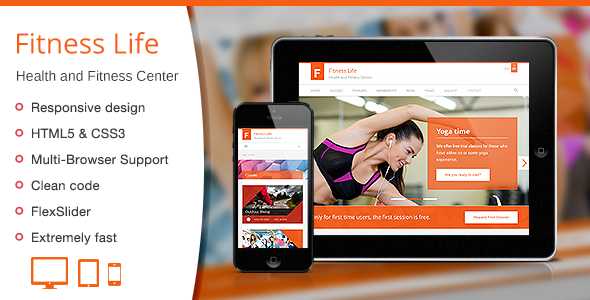
Fitness Life health-beauty is a static HTML template sold on ThemeForest for $20, built by the developer WPlook for gyms, fitness studios, spas and similar sport businesses. It ships with pre-built pages for classes, trainers, memberships, news and contact, and it is aimed at freelancers and small agencies who need to hand over a finished marketing site without building a WordPress theme from scratch. Anyone expecting a content management system, a booking engine or ongoing updates should look elsewhere before paying.
The listing carries 313 sales and a rating that buyers can check on the product page, which puts it in the modest-but-established bracket for a template of this kind. What matters more than the sales figure is the date attached to it: the last vendor update is recorded as 20 January 2014. That single fact shapes almost everything else in this review, because a 2014 HTML template is a very different proposition from one released last year.
What the Fitness Life health-beauty template actually includes
The core deliverable is a set of hand-coded HTML pages with CSS and JavaScript, not a theme that plugs into a CMS. That distinction matters: the buyer receives files, edits them in a code editor, and uploads them to any static host. There is no admin panel, no database and no login for a client to manage content themselves.
Within that package, the page set covers the usual ground for a fitness business website. A classes page gives each discipline its own presentation slot, which suits studios running a mixed timetable of pilates, crossfit, kickboxing and general training sessions. A trainers page provides a structured way to introduce instructors with photos and short biographies, which is one of the few genuinely trust-building elements on a gym site. A membership page handles plan comparison, and a news list gives the site somewhere to publish announcements, schedule changes or promotional posts. A contact form page completes the set.
The layout is described as responsive and tuned for tablet and mobile screens. For a template of this vintage that claim deserves scrutiny rather than acceptance, and the honest position is that the vendor states responsiveness but does not document which breakpoints, which grid system or which browsers were tested. A buyer should verify this in a live preview at several viewport widths before committing, particularly on the class timetable and membership tables, which are the layouts most likely to break on narrow screens.
The tag list on the listing is broad — classes, crossfit, fitness, fitness center, gym, health, kickboxing, membership, pilates, spa, sport, training — and it reflects the template’s positioning as a general-purpose sport and wellness skin rather than a specialist tool for one discipline. That breadth is useful if the project is a multi-service gym; it is less useful if the site needs to express the specific character of, say, a boutique pilates studio.
Where this template fits and where it does not
The strongest fit is a small, brochure-style website for a single gym, studio or spa where the content changes rarely and the owner is happy to email a developer for edits. A freelancer quoting a fixed-price build for a local fitness business can deliver a complete, presentable site quickly, because the page inventory already matches what such a client needs. The same applies to a personal training business that wants a landing presence with a class list, a trainer profile and a contact form.
It also suits agencies building a quick prototype or pitch mockup. Dropping real copy and photography into an existing page set is far faster than designing from zero, and at $20 the cost is negligible against the time saved.
Where it falls down is any project with an ongoing content requirement. A gym that wants to publish a new class every week, update its timetable seasonally, or let a manager log in and edit text will find a static template actively obstructive. The same is true for anything requiring online class booking, membership payments, member logins or integration with a scheduling platform. None of that is present, and none of it can be added without writing custom code or rebuilding the site on a CMS.
A second poor fit is a brand that needs to look current. The design language of a 2014 template is recognisable, and buyers should look at the live preview with that in mind rather than assuming the screenshots have been refreshed.
Strengths and limitations of the Fitness Life template
Strengths
- Very low entry cost at $20, which makes it viable for small client budgets and for testing a design direction before committing to a larger build.
- A page inventory that already matches a fitness business: classes, trainers, membership, news and contact are the five pages most gym sites actually need.
- Static HTML output means fast hosting, no database, no security patching and no plugin maintenance burden.
- Broad category fit across gym, spa, pilates, crossfit and general training, so the same purchase can serve more than one client type.
- Established enough to have accumulated 313 sales, which means buyer feedback and any reported issues are visible on the listing rather than unknown.
Limitations
- The last recorded vendor update is January 2014. More than a decade without a release raises real questions about browser compatibility, and the vendor does not state which browsers or devices were tested.
- No CMS. Every text change, new class or price update requires editing HTML and re-uploading files.
- No booking, payment, membership login or scheduling functionality, despite a membership page being part of the package. That page is presentational only.
- Responsiveness is claimed but not documented. Breakpoints, grid framework and mobile behaviour are not specified in the listing.
- No stated support terms, documentation scope or update policy beyond the single 2014 entry.
- Design conventions from that era — layout density, typography scale, icon style — read as dated against current expectations.
How it compares with other options in this category
Buyers researching this space are usually choosing between three routes: a static HTML template like this one, a WordPress theme, or a site builder subscription.
Against WordPress themes, the trade-off is control versus convenience. A theme gives the client a dashboard, plugin ecosystem access and a developer community still shipping updates. The static template gives speed, zero maintenance and no hosting complications, but it hands all content control to whoever holds the code. For a client who will never log in, that is not a loss. For one who wants to post a schedule change on a Friday afternoon, it is disqualifying.
Against site builders, the comparison is cost structure rather than capability. A builder spreads cost across a subscription and locks the site into that platform. A one-off $20 template is owned outright, which suits agencies delivering a fixed-scope project and then walking away.
Within the static template category itself, the differentiator is age. Plenty of HTML templates in the health and fitness niche ship with modern CSS frameworks, documented breakpoints and recent update histories. Fitness Life competes on price and on the completeness of its page set, not on technical currency. A buyer who needs the cheapest possible route to a five-page gym site will find it competitive; one who needs a maintainable foundation for the next five years will not.
Frequently Asked Questions
Is Fitness Life a WordPress theme or a plain HTML template?
It is a plain HTML template. The package contains static HTML, CSS and JavaScript files that are edited directly and uploaded to a web host. There is no WordPress integration, no admin dashboard and no database, so content cannot be managed through a browser interface without additional development work.
Can Fitness Life handle online class bookings and membership payments?
No. The membership page is a presentational layout only, and the template includes no booking engine, payment gateway or member login. Adding those features would require custom development or migrating the site to a CMS with suitable plugins. Buyers who need bookings should treat this as a design starting point rather than a finished solution.
Is the template still maintained and compatible with current browsers?
The listing shows the last vendor update as 20 January 2014, and no further releases are recorded. The vendor does not state which browsers or devices were tested, so compatibility with current browser versions is unverified. Buyers should test the live preview across modern browsers and mobile viewports before purchasing.
What kind of business is Fitness Life best suited to?
It fits small gyms, fitness studios, spas and personal training businesses that need a brochure-style site with fixed content. The included classes, trainers, membership, news and contact pages cover the standard requirements. It is a poor fit for any organisation needing frequent content updates, online scheduling or member accounts.
Verdict on the Fitness Life health-beauty template
Buy this if the project is a small, largely static website for a gym, studio or spa, the budget is tight, and nobody on the client side expects to edit content themselves. At $20 with 313 sales behind it, the risk is low and the page inventory is genuinely well matched to the niche. Freelancers and agencies pitching a quick build will get value from it.
Do not buy it if the site needs a CMS, online bookings, membership payments or a design that reads as current. The 2014 update date is the deciding factor: with no documented browser testing and no release in over a decade, this is a template to use as a starting point for a short-lived or low-stakes site, not as the foundation for a business’s primary web presence over the long term. Buyers who need longevity should pay more for a maintained alternative.


