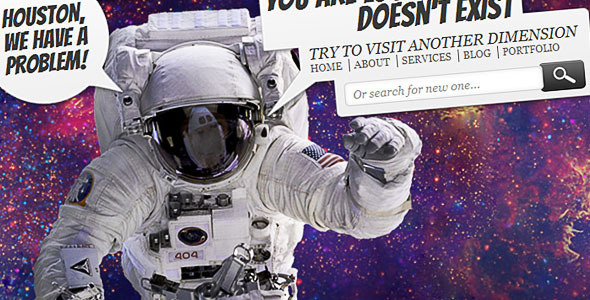
Lost in Space 4 4 Pages is a static HTML, CSS and JavaScript error page template sold on ThemeForest for $8, built around an animated space background and a public-domain NASA photograph. It exists to replace the default server error screens that Apache, Nginx and most hosting panels serve when something breaks, and it ships as a small package of hand-editable front-end files rather than a plugin or a theme with an admin panel. Buyers who want a branded, self-contained 404 page without touching a CMS should look at it; anyone expecting a WordPress plugin, a settings screen or ongoing updates will be disappointed.
What the Lost in Space 4 4 Pages package actually contains
The deliverable is deliberately narrow. The download unpacks into HTML, CSS and JavaScript template files, two layered Photoshop documents, and a help file. That is the whole product. There is no build step, no package manager, no framework dependency and no server-side code, which means the files can be dropped onto any static host or copied into the document root of an existing site and served directly.
The animated background is the centrepiece. It is driven by jQuery, and the effect is a drifting starfield layered behind the error message rather than a video file or a CSS keyframe animation. That distinction matters in practice: a jQuery-driven canvas or DOM animation keeps the download small and avoids the bandwidth cost of a looping video, but it also means the page carries a JavaScript dependency that a pure CSS alternative would not. On a 404 page, which by definition is served to visitors who have already hit a dead end, that trade-off is worth thinking about.
The template is not locked to the 404 status code. The vendor states it is ready for 401, 403, 404, 500 and 503 responses and for “many other purposes,” which in practice means the headline and body copy are the only things that need swapping to repurpose it as a maintenance notice, a coming-soon holding page or a generic “something went wrong” screen. Because the markup is plain HTML, that swap is a text edit, not a configuration exercise.
Typography is handled with two typefaces: Bangers, a free Google web font used for the display heading, and Georgia for body text. Georgia is a system font, so it renders without a network request; Bangers is loaded from Google’s font service unless the buyer self-hosts it. The vendor does not state whether a self-hosted copy of Bangers is included, so anyone in a jurisdiction with GDPR concerns about Google Fonts requests should plan to download and serve the font locally.
Imagery comes from two credited public-domain sources. The astronaut photograph is of Michael Gernhardt on a robotic arm, taken for NASA’s Johnson Space Center. The galaxy image is a Milky Way centre shot produced for NASA by the Space Telescope Science Institute and for ESA by the Hubble European Space Agency Information Centre, released under Attribution 3.0 Unported. Both are properly attributed in the listing, which is more than many low-cost templates bother to do, and the credit lines should be preserved in the footer if the images stay in place.
Where Lost in Space 4 4 Pages fits, and where it does not
The obvious fit is a static site or a hand-built marketing site where the developer controls the server configuration and can point the error document directive at a custom file. Agencies maintaining a portfolio of small client sites are a second natural audience: one $8 purchase covers an unlimited number of projects under the standard ThemeForest licence terms, and the PSD files mean the visual can be re-skinned to match each client’s palette without rewriting the CSS from scratch.
It also suits anyone who needs a themed holding page for a specific HTTP status. A 503 page for planned maintenance, or a 403 page for a members-only area, is a five-minute edit from the 404 default. The single-file structure makes that kind of duplication straightforward.
Where it stops being the right choice is on a WordPress, Joomla or Drupal site. There is no plugin, no module and no theme integration here. A WordPress site owner would need to upload the files manually, register them with the theme’s 404 handler or a redirect plugin, and re-implement the markup inside the theme’s header and footer if they want visual consistency with the rest of the site. At that point a dedicated 404 plugin with a live customiser is less work. The same applies to any project where the error page must inherit the site’s navigation, search box and branding automatically — this template is a standalone page, not a component.
There is also a currency problem. The vendor’s last recorded update is October 2012. The jQuery version bundled with the template is therefore old, and while the animation may still run perfectly well, a developer dropping a decade-old jQuery build into a modern site should expect to either upgrade the library or isolate the script so it does not conflict with anything else on the page.
Strengths and limitations of this error page template
Strengths
- The price is $8, which is low enough that the decision is essentially about fit rather than budget.
- The vendor reports 587 sales, so the template has been exercised by a reasonable number of buyers and is not an untested one-off.
- Editable PSD files are included, which is unusual at this price point and makes genuine visual customisation possible rather than just text swapping.
- Valid HTML and CSS, as stated by the vendor, means the markup is unlikely to introduce validation errors into an otherwise clean site.
- Coverage of 401, 403, 404, 500 and 503 responses from a single package removes the need to source separate templates per status code.
- Image licensing is clean and attributed, with both photographs drawn from public-domain NASA sources.
- No framework, CMS or build tooling is required, so deployment is a file copy.
Limitations
- The last vendor update is dated 31 October 2012. There is no indication of maintenance since, and no stated compatibility with current browser versions or current jQuery releases.
- The animation depends on jQuery. On a page served to users who have just hit a broken link, adding a render-blocking script is a real cost, and there is no stated no-JavaScript fallback.
- There is no WordPress plugin, shortcode or Gutenberg block. CMS users must integrate the files manually.
- The help file’s contents are not described in the listing, so the depth of the documentation cannot be assessed before purchase.
- Bangers is loaded from Google Fonts with no stated self-hosted alternative, which is a compliance consideration in some regions.
- Only two images and two typefaces are supplied, so the visual range is narrow without further asset work.
How Lost in Space 4 4 Pages compares with the wider error page category
Error page templates generally fall into three groups: standalone HTML packages like this one, CMS plugins that generate the page from inside an admin dashboard, and full themes that bundle a styled 404 as one small part of a much larger purchase. The standalone route wins on portability and cost. A single HTML file can be served by any web server, moved between projects, and edited in any text editor. It loses on integration: nothing is wired into a CMS, nothing inherits the site’s menus or search functionality, and every change is a code change.
Plugin-based alternatives invert that. They are quicker to install and usually offer a live preview, but they tie the error page to one platform and often to one subscription. For a developer running several static sites, a plugin licence per site is a worse deal than one portable file set. For a WordPress site owner with no interest in editing markup, the plugin is clearly the better route.
Against full themes, the comparison is less about capability than about scope. A theme’s built-in 404 is free but generic and rarely customisable beyond a logo swap. Lost in Space 4 4 Pages is the opposite: highly customisable, but not connected to anything. The animated background and the layered PSDs are the differentiators here — most templates in this bracket ship a static illustration and a text block, not an animated scene with source files. Buyers who specifically want the motion effect have few cheaper options; buyers who just need a tidy “page not found” screen are paying for an aesthetic they may not need.
Frequently Asked Questions
Does Lost in Space 4 4 Pages work with WordPress?
Not directly. The package contains only HTML, CSS, JavaScript and PSD files, with no WordPress plugin, block or theme integration. A WordPress user would have to upload the files manually and register them with the theme’s 404 handler or a redirect plugin, then rebuild the markup inside the theme’s header and footer if visual consistency with the rest of the site is required.
Can the template be used for error codes other than 404?
Yes. The vendor states it is ready for 401, 403, 404, 500 and 503 responses, and for other purposes beyond error handling. Because the page is plain HTML, switching status codes is a matter of changing the heading and body copy and pointing the correct server directive at the file. The same file can serve as a maintenance or holding page.
Is the animated background a video or a script?
It is script-driven. The animation runs on jQuery rather than a video file or a CSS-only effect, which keeps the page weight low but introduces a JavaScript dependency. The vendor does not state whether a no-JavaScript fallback is included, so visitors with scripting disabled may see a static background or no background at all.
What licence applies to the images and fonts?
Both photographs are public domain. The astronaut image of Michael Gernhardt was created for NASA’s Johnson Space Center, and the Milky Way image was produced for NASA and ESA by the Space Telescope Science Institute and the Hubble European Space Agency Information Centre under Attribution 3.0 Unported. Bangers is a free Google web font; Georgia is a system font.
Verdict on Lost in Space 4 4 Pages
This is a sensible purchase for a developer or agency running static or hand-built sites who wants a distinctive, animated error page and is comfortable editing HTML directly. The inclusion of layered PSDs at $8, combined with coverage of five HTTP status codes and cleanly licensed imagery, makes the value proposition straightforward for that audience. It is a poor fit for WordPress, Joomla or Drupal site owners who expect a plugin, a settings screen and automatic inheritance of their site’s navigation and branding — those buyers will spend more time integrating the files than the template saves. The 2012 update date and the jQuery dependency are the two things to weigh honestly before buying; neither is disqualifying, but both mean the files should be reviewed and probably modernised before they go live on a current site.